You Found A Crack In Your Wall – Now What?
02 March 2026If you found a crack in your wall, don’t panic yet. They are by far the most common concerns raised during a building survey. In many cases they are harmless. Buildings naturally move over time, and materials expand, contract, and settle.
However, the orientation, width, and location of cracks can also provide important clues about how a building is behaving structurally. For us as chartered surveyors, these visible signs form part of a wider assessment of structural movement, foundation stability, and environmental pressures acting on the building.
Understanding the patterns of cracking help us determine whether a building is stable, or if further investigation may be required.
Vertical Cracks
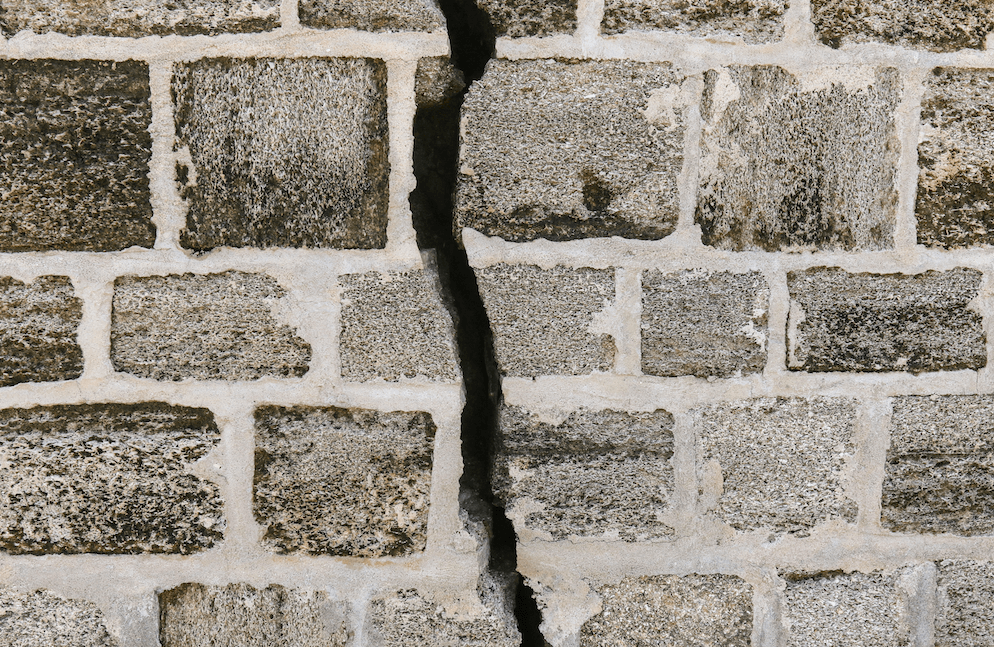
Vertical cracks are often associated with natural building settlement or thermal movement. As a building ages, small movements in the structure or foundations can create straight cracks in plaster or masonry.
In many cases these are minor and cosmetic, as hairline vertical cracks are frequently linked to plaster drying or seasonal movement within the building fabric.
However, wider vertical cracks may indicate a greater level of stress within the structure. When vertical cracks exceed around 5 mm in width, they can suggest more significant movement or possible foundation shifting.
We consider the location of the crack and whether it relates to structural elements, such as window or door openings, which are naturally weaker points within walls.
Horizontal Cracks
Horizontal cracks are generally treated with greater caution. They may indicate lateral pressure acting on a wall, which can arise from external forces rather than simple settlement.
Common causes include:
Soil pressure acting against foundations or retaining walls
Hydrostatic pressure from groundwater
Structural stress causing a wall to bow or move
In some cases, the discovery of horizontal cracking can suggest that part of a wall is under strain or beginning to fail structurally. If you find a horizontal crack in the wall of your building, we strongly advise booking surveyors to examine whether the wall shows any additional movement or distortion.
Diagonal and Stair-Step Cracks
Diagonal cracks, particularly those that follow the mortar joints in brickwork, are often the clearest visual indicator of subsidence or differential settlement.
These cracks frequently appear in a stepped pattern within brickwork and are commonly seen radiating from the corners of windows and doors, which are structural weak points within a wall.
This pattern of cracking often occurs when one part of a building’s foundation moves more than another. As the structure adjusts, stress is transferred through the masonry, creating the characteristic stepped cracking pattern.
Because these cracks are closely linked to foundation movement, we also advise you nook a charter surveyor immediately, as they are one of the key signs we would investigate when assessing possible subsidence.
Hairline Cracks
Hairline cracks, typically less than 1 mm wide, are usually non-structural.
They are commonly caused by:
Drying shrinkage in plaster
Minor seasonal movement within a building
Small changes in temperature or humidity
These cracks generally affect surface finishes rather than the structure itself. If this is the sort of crack in your wall that you discover, please rest assured that in many cases they can simply be filled and redecorated.
How a Chartered Surveyor Assesses Cracks
While the type of crack provides useful clues, a surveyor will rarely rely on a single sign alone. The wider pattern of damage and the behaviour of the building are just as important.
Surveyors typically assess several key factors.
Crack Width
Crack width is often categorised using guidance such as BRE Digest 251, which helps surveyors judge the severity of damage.
Category 0–2 (less than 5 mm)
Usually cosmetic and unlikely to affect structural stability.
Category 3–4 (5 mm to 25 mm)
Can lead to serviceability problems such as sticking doors, damp penetration, or the need for masonry repairs.
Category 5 (greater than 25 mm)
Indicates severe structural damage and may require significant structural works such as underpinning.
Tapering
The shape of a crack can also provide evidence of movement.
If a crack is wider at the top than the bottom, this may indicate that part of the foundation has dropped, causing rotational movement within the structure.
Mirroring
Surveyors also check whether cracks appear on both the internal and external faces of a wall.
When cracking mirrors through the thickness of the wall, it suggests that the movement affects the structure itself rather than just internal plaster finishes.
Secondary Signs of Movement
Cracks are rarely assessed in isolation. Surveyors will also look for related symptoms of movement, including:
Doors or windows sticking in their frames
Sloping or uneven floors
Gaps between skirting boards and walls
Distortion around openings
These additional signs help determine whether the building is experiencing active structural movement or whether the cracking relates to historic movement that has already stabilised.
When to Seek Professional Advice
While small cracks are common in many buildings, certain patterns should be assessed by a professional.
It is advisable to consult a surveyor if you notice:
Cracks wider than 3 mm to 5 mm
Diagonal or stepped cracks, particularly near windows or doors
Cracks that appear suddenly or begin growing quickly
Daylight visible through a crack
Multiple cracks appearing at the same time
A chartered surveyor can assess whether the building is stable and advise on whether further investigation or remedial work may be required.
Discovering cracks can be alarming, but they are often simply part of how buildings age and adapt to their environment. The role of us as your surveyor is to interpret those signs within the context of the building as a whole, distinguishing between cosmetic issues and those that may point to deeper structural movement. If you’re concerned about a crack in your wall, please call our experienced team today.
